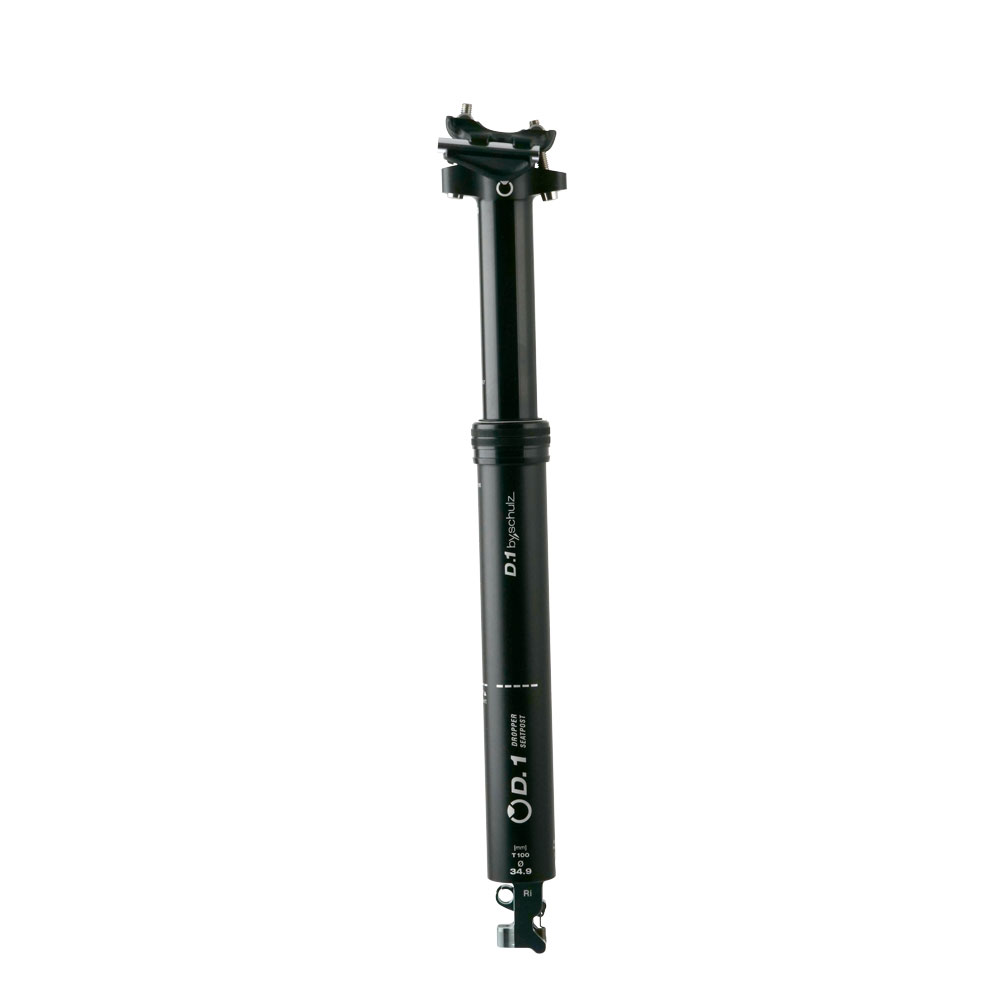
D.1 Ri variable seatpost for e-bikes and mountain bikes
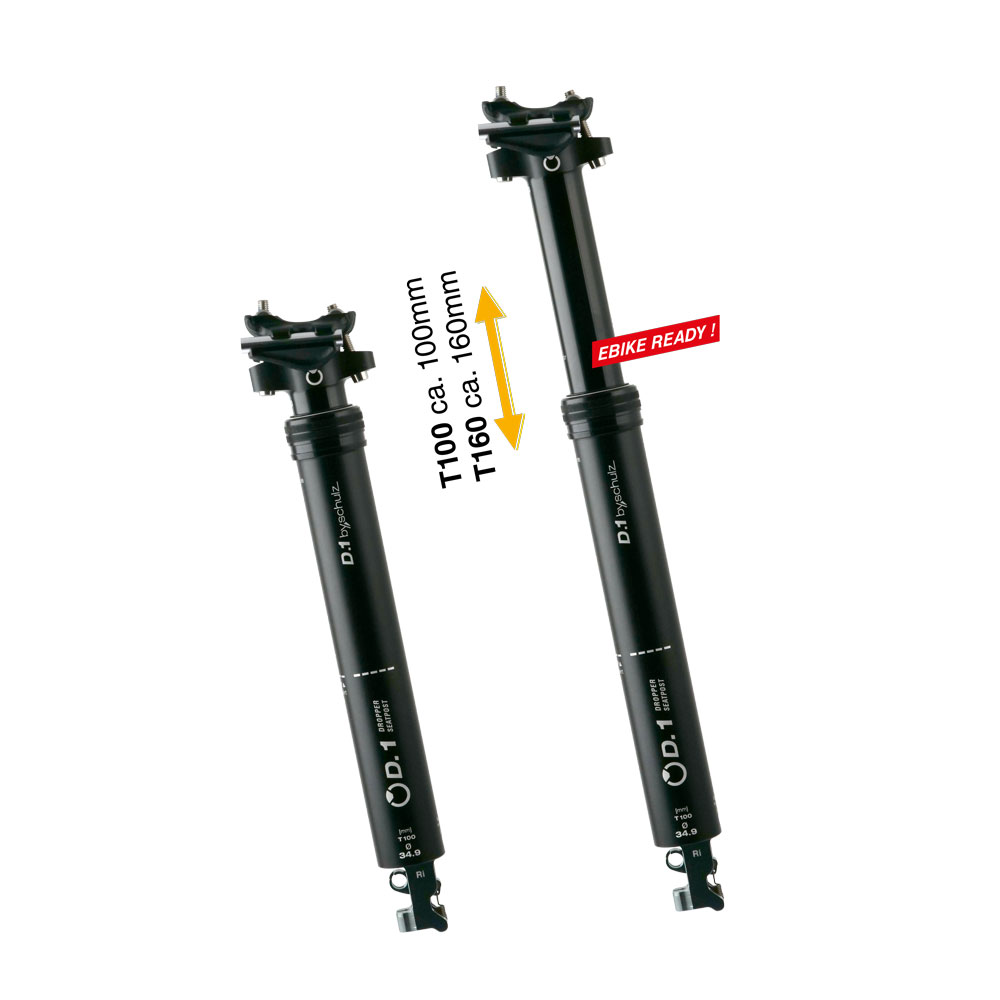
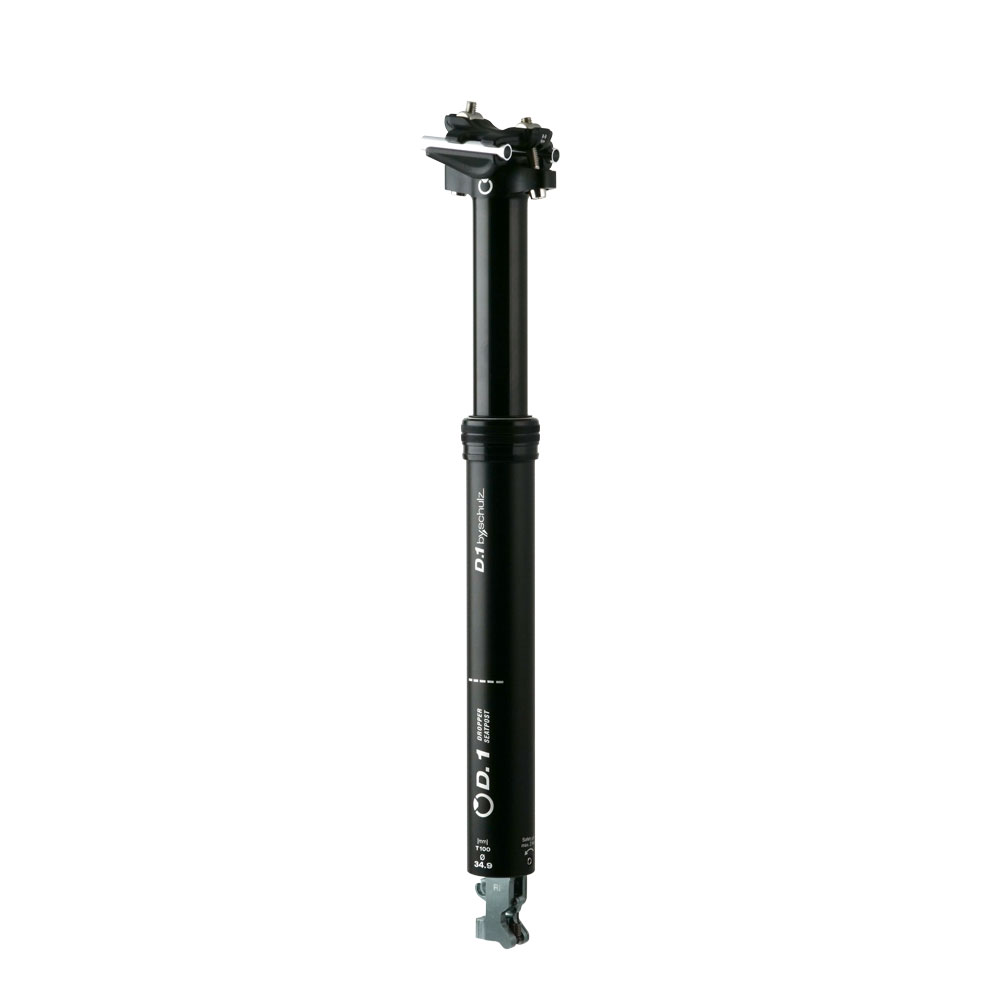
Mastering difficult descents and enjoying top control? With the D.1 Ri variable seat post, which is also approved for e-bikes and e-mountainbikes, the rider can vary the saddle height and seat height continuously depending on the riding situation and the steepness of the descent – and thus ride downhill more safely! Conveniently controlled mechanically via the handlebar operating lever, this variable seat post can be lowered continuously thanks to the gas pressure spring and linear guide. This also lowers the rider’s center of gravity, benefiting both city/trekking riders and mountain bikers on road or off-road rides. Made of robust aluminum, the D.1 Ri provides 100 mm of drop on the T100 model or – an advantage for demanding MTB trails where the saddle is lowered as far as possible for best control – 160 mm on the T160 model. The dropper post comes with low-maintenance cable routing in the frame.
Please be sure to observe the installation requirements!
| Material | Aluminum AL-6061, AL-6066, AL-7075 |
| Offset | 0 mm |
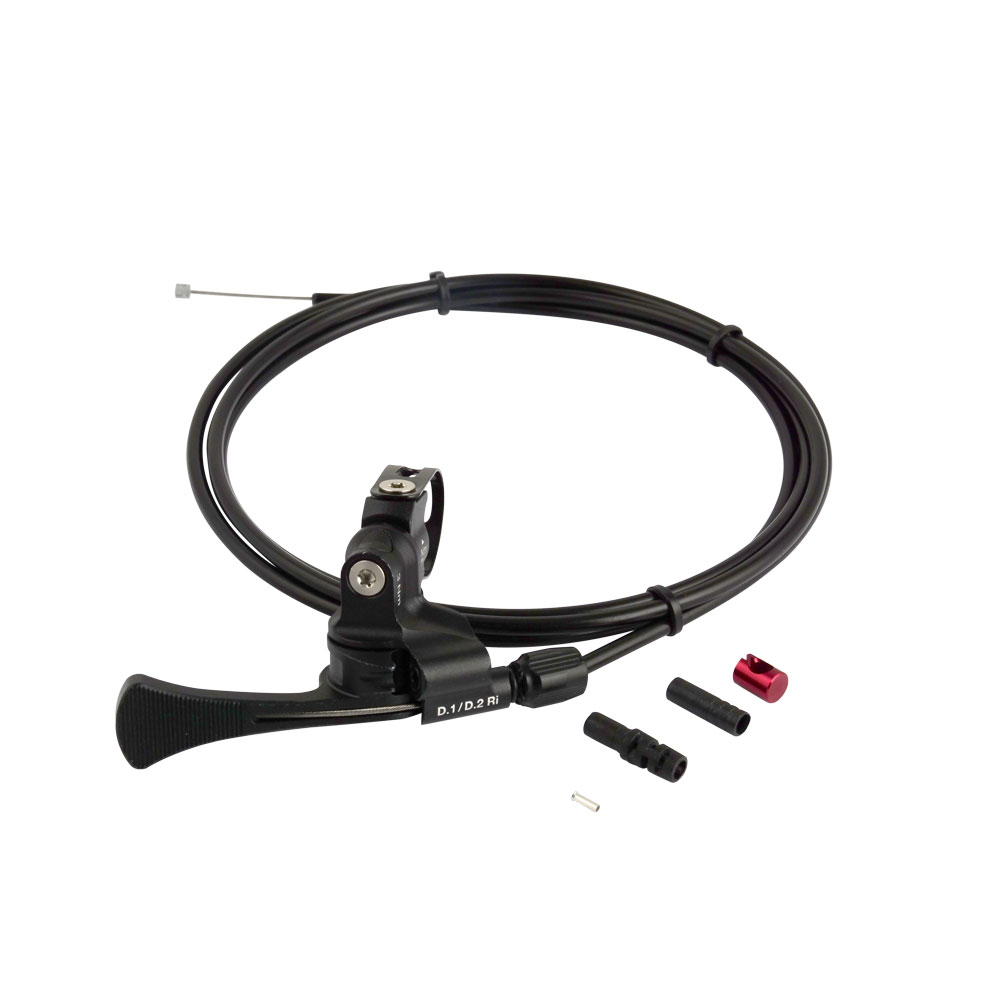
Remote lever D.1/D.2 Ri
The D.1 The Ri seat post comes with a remote lever tailored to the model. You can recognize the correct design by the imprint on the underside or the lever radius.
Cable routing:
Gas struts:
NOTE: Plan the installation and cable routing carefully. Ensure that the inner cable and the outer sheath are long enough for the planned routing through the frame! Remove any burrs from the seat tube of the bike. All parts must be clean during installation! Before installation, check that the diameter of the support matches the diameter of the seat tube!
1. The by,schulz D.1 Ri seat post allows the cables to be routed inside the frame. Not all bicycle frames/e-bike frames are suitable for laying internal cable runs. Für die Verlegung ist eine bereits vorhandene Öffnung für die Zugverlegung am Rahmen notwendig. The cable routing must not be kinked or crushed along its entire length! With e-bikes, it must also be possible to route the cables along the battery and motor.
2. Before installation, ensure that there is sufficient space in the bicycle frame for installing the D.1. Ri seat post is available, and the seat post does not collide with other parts of the bicycle, or bends in the frame geometry, the battery, or the motor when installed!
3. Check that the width of the saddle frame is compatible with the head of the seat post. It must not be less than 35 mm on the inside. There are some saddles (e.g., core leather saddles) that converge too narrowly at the front of the frame and therefore cannot be combined with this support. Such use is not recommended as it can cause permanent damage to the saddle and support.
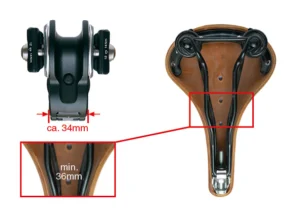
4. In the case of D.1 Ri comes standard with a saddle clamp for saddle frames with a diameter of 7 mm. Saddle clamps for 8 mm diameters are available if required. Never combine 7 mm clamps with an 8 mm diameter saddle frame, or vice versa.
Note: Saddles with oval saddle frames must not be used in combination with this support!
5. Check whether the minimum insertion depth of the seat post of 100 mm can be maintained!
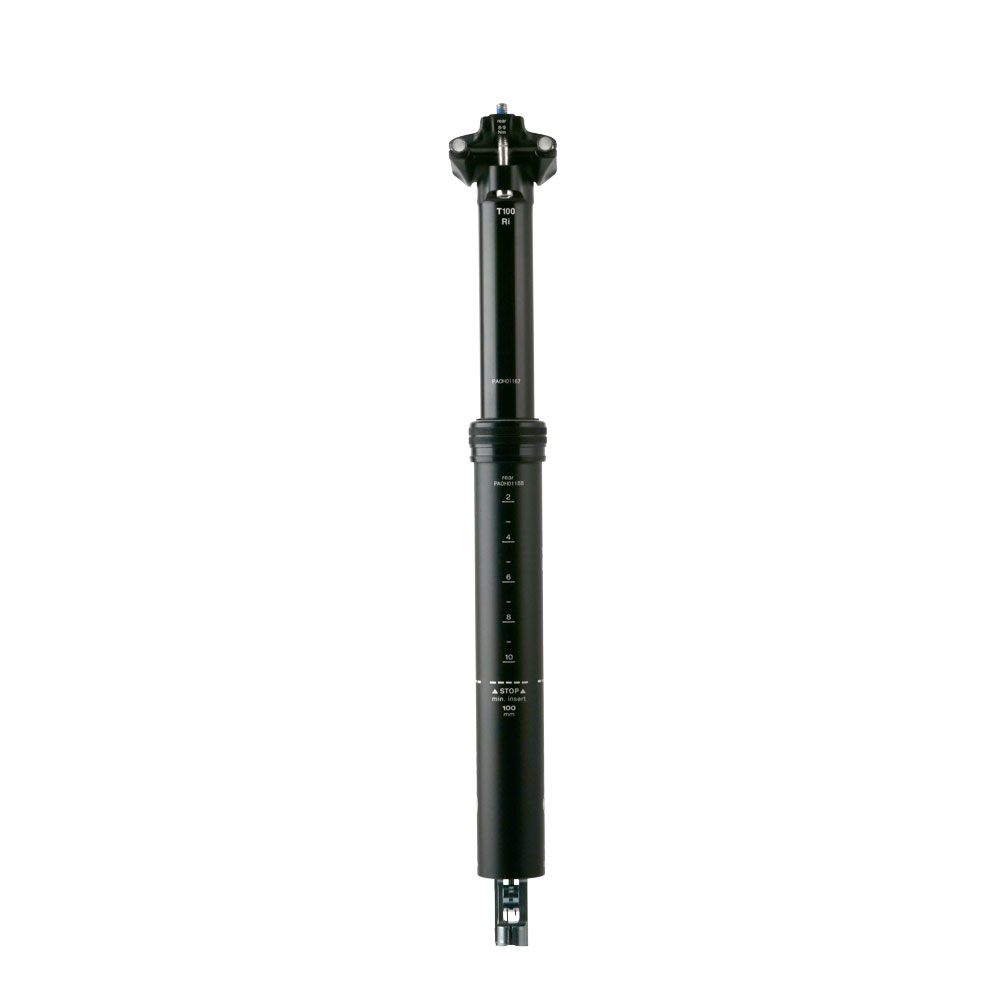
This is marked on the rear of the seat post tube (STOP min. insert) below the extension scale. The production serial number is located above the scale.

6. If the frame manufacturer specifies different minimum insertion depths, these must be observed. The higher value is decisive. Failure to observe the minimum insertion depth may result in falls or damage to the seat post and/or frame.
7. The clamping force of the seat post clamp should be 5–6 Nm when securing the seat post in the frame.
Exceeding the clamping force values can lead to malfunctions such as reduced immersion or extension speed and damage to components of the D.1. Ri.
8. The diameter of the seat tube of your bicycle/e-bike should match that of the seat post. Any reduction sleeves that may be required must have a minimum length of 100 mm and must always be inserted completely into the frame.
If the frame manufacturer provides different specifications regarding the sleeve length, these must be observed. The higher value is then decisive!
You can find the by,schulz G.Shim reduction sleeves at:
www.byschulz.com/produkte/g-shim-reduzierhuelse

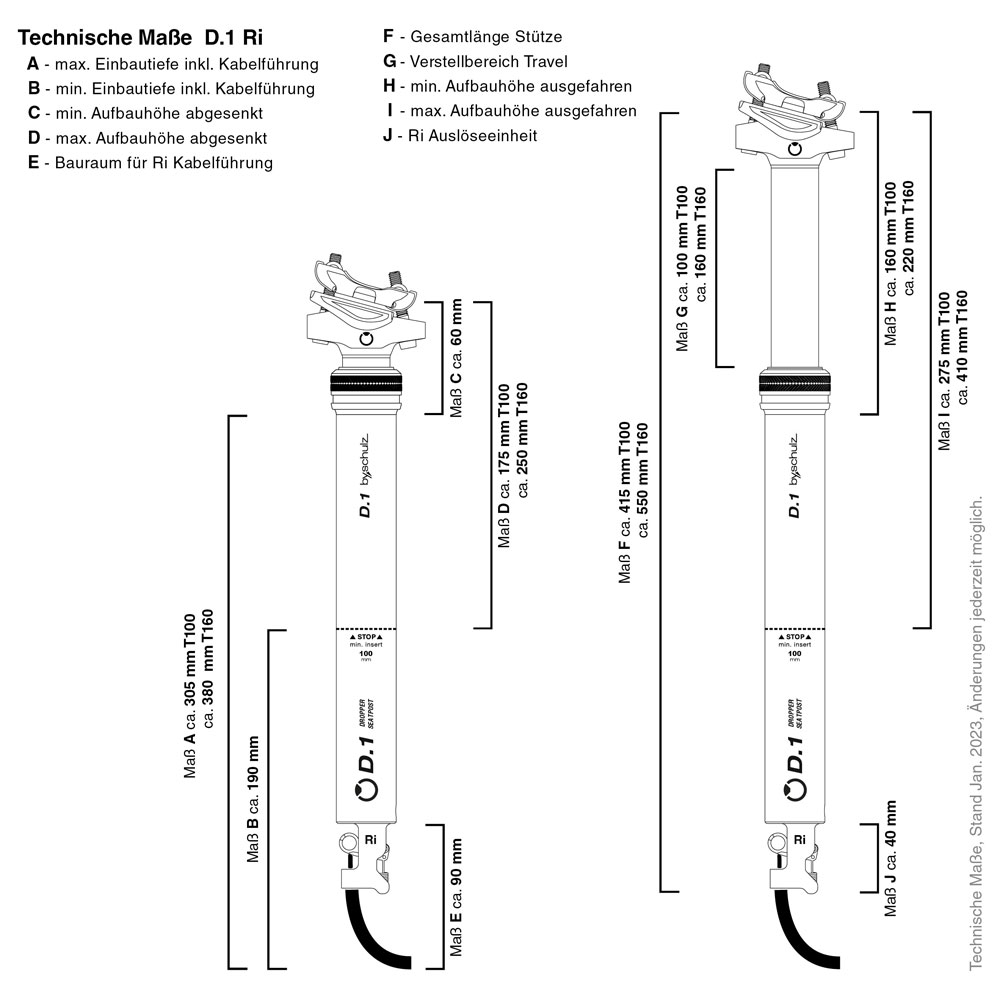
9. Dimensions of retracted and extended support
NOTE: Please consider the installation height of the D.1. Ri. Check these requirements by measuring your bicycle as accurately as possible in advance. Please also note that the individual height of your saddle must be added for the correct seating position.
Regardless of the installation depth of the seat post, you should still be able to stand securely with your front foot on the ground when the seat post is fully lowered (Fig. 8.9.1)! Is the D.1 seat post is fully inserted into the seat tube of the frame and you do not have a secure footing, we advise against using the support in combination with this bicycle.
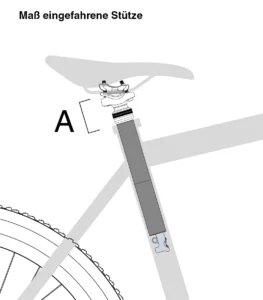

Dimensions:
Measure A – Min. Height when lowered: approx. 60 mm
Dimension B – Min. Extended height:
T100 = approx. 160 mm
T160 = approx. 220 mm
Dimension C – Max. benötigte Einbautiefe:
T100 = approx. 255 mm (plus cable)
T160 = approx. 330 mm (plus cable)
Dimension D – Total length when extended:
T100 = approx. 415 mm
T160 = approx. 550 mm
Please also note that the individual height of your saddle must be added for the correct seating position.
Dimensions A, C, and D refer to the center of the saddle clamp. Please note that, depending on the frame for bending the cable routing, approx. 50 mm of additional installation space is required below the D.1. Ri is needed!
Further dimensions can be found under Technical Data.